Instagram Reels Transcript vs TikTok Transcript: What's Actually Different
For transcription, Instagram Reels and TikTok videos are more alike than different. The reliable path is the same on both: get the audio file onto your device, then upload it. What genuinely differs is what each platform exposes to an outside tool — and we can only give you measured results for Instagram, because that is what we tested. We have not run the same tests against TikTok.
What we measured on Instagram
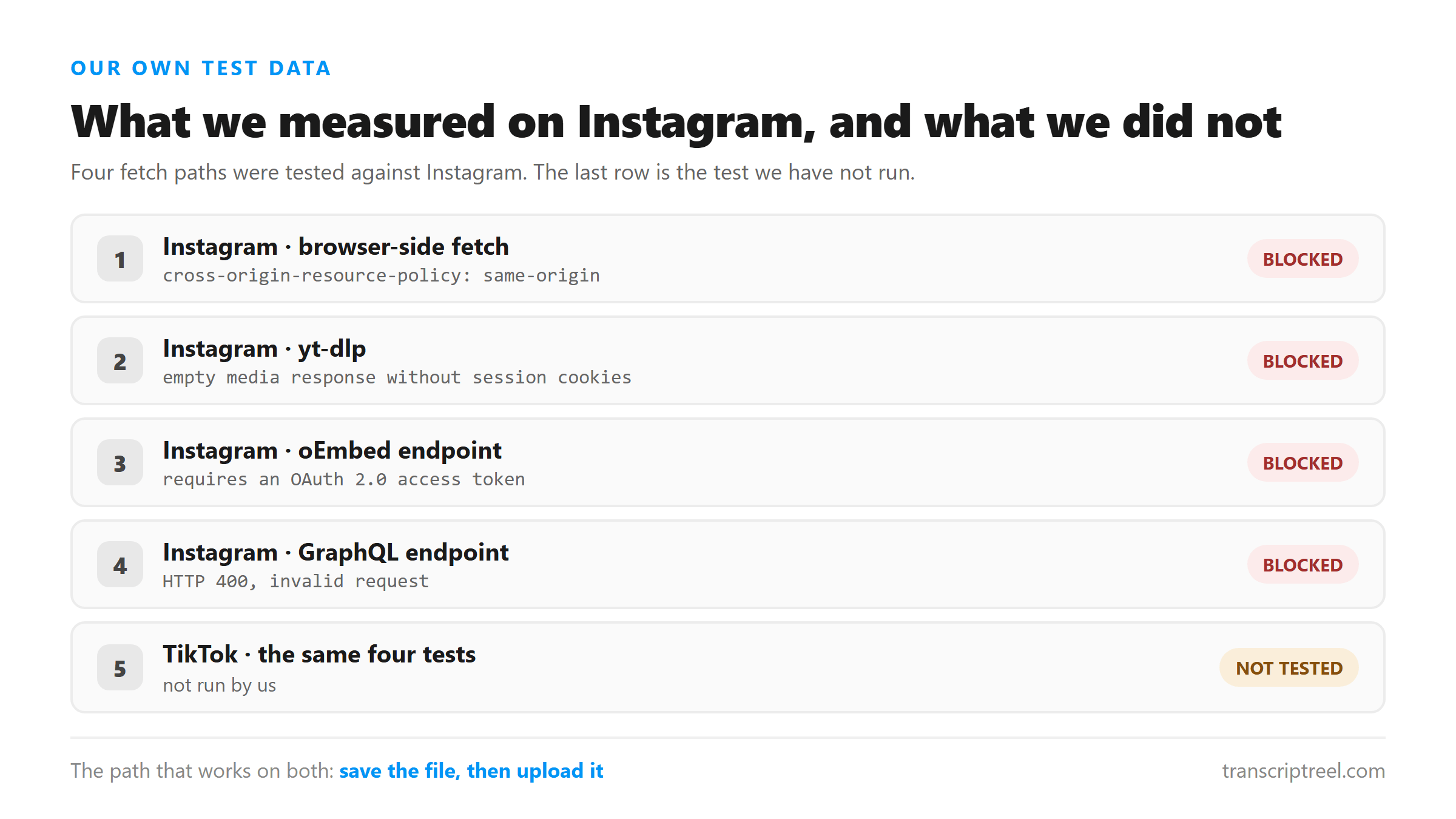
We pointed four different server-side fetch methods at a public Reel on our own build in September 2026. These are the exact responses each one returned:
- Browser-side fetch: Instagram sends a
cross-origin-resource-policy: same-originheader, so the browser rejects any request from another origin before it reaches the media. - yt-dlp: returns an empty media response. Without authenticated session cookies there is nothing usable in it.
- oEmbed endpoint: requires an OAuth 2.0 access token. Without one, the response contains no video URL.
- GraphQL endpoint: returns HTTP 400 with an invalid request error for unauthenticated calls.
What we did not measure
We have not run those same four tests against TikTok. That is the honest state of our data, and it is the part most comparison pages skip. If a page tells you one platform is easier or harder for transcript tools, ask what they actually ran. We do not have that result, so we are not publishing one.
The difference that actually matters for you
Set the platform comparison aside for a moment. What decides your transcript quality is the file you end up uploading, not which app it came from.
- Your own Instagram Reel: save it from the app. You get the original encode, which is the cleanest input available.
- Someone else's Reel: screen-record it. The audio track is what matters for transcription, and a screen recording captures it.
- A TikTok download: it usually carries a visual watermark and has been re-encoded. The watermark is drawn on the frames and does not touch the audio, but the re-encode can cost you some audio quality.
What the model actually receives
Whichever platform the file came from, it is converted to 16 kHz mono PCM WAV before the model reads it. That is the format @cf/openai/whisper expects on Cloudflare Workers AI. By the time transcription starts, the platform is no longer part of the equation — what matters is how much clean speech survived the trip.
So is one platform better for transcripts?
Not in any way we can measure, and we are not going to imply otherwise. What we can say is that a file-first workflow works on both platforms, and it is the only workflow we have found that keeps working. Anything that depends on a platform's internal endpoint is a bet that the endpoint will not change.
FAQ
Can I use the same tool for TikTok videos?
Yes. Upload the file the same way. Nothing in the pipeline is Instagram-specific — it takes an audio or video file and returns text. What we have not tested is whether TikTok's server-side endpoints behave the way Instagram's do.
Is TikTok easier to transcribe than Instagram?
We do not know, and we will not guess. We tested Instagram and published those results. Nobody in this space seems to publish their test method, which is exactly why the claims are hard to compare.
Does a watermark affect the transcript?
No. A watermark is drawn on the video frames. Transcription reads the audio track, which the watermark does not touch. Re-encoding, which usually comes with a download, is the part that can cost you audio quality.